The Goodday: Crafting Authenticity with a Script Typeface
In a digital landscape saturated with clean, geometric sans serif font families, there is a distinct longing for human connection. We see it in the resurgence of film photography, the popularity of hand-lettered signage, and the demand for design assets that feel personal rather than algorithmic. This is where typography does more than just display information; it sets a mood. When you need to evoke warmth, nostalgia, or high-end elegance without relying on stiff corporate aesthetics, a premium font like The Goodday becomes an indispensable tool in your creative arsenal.
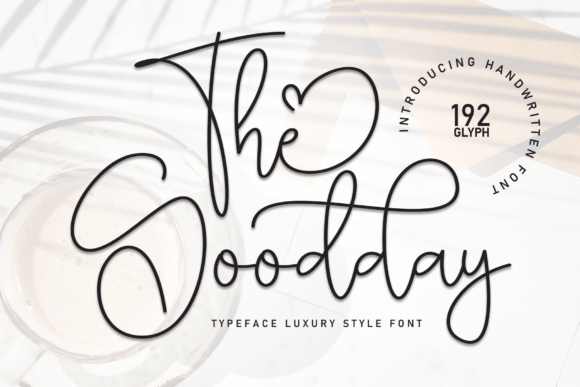
At its core, The Goodday is a stylish and incredibly elegant script font. However, calling it just a script font does a disservice to its versatility. It is a masterclass in balance. The typeface features flowing, connected letterforms that mimic the natural rhythm of hand-lettering, yet it retains a level of legibility that many handwritten font styles struggle to achieve. The visual personality of The Goodday is defined by its smooth curves and subtle swashes. It doesn’t scream for attention with overly ornate loops; instead, it whispers sophistication. The baseline has a gentle, organic movement that prevents the text from looking rigid, making it ideal for projects that require a "human touch."
The Psychology of the Handwritten Touch
Why does a font like The Goodday have such a profound impact on brand perception? It comes down to psychology. In modern typography, the choice of typeface signals intent. A heavy sans serif might signal strength and stability, while a serif font implies tradition and authority. A script font like The Goodday signals intimacy and creativity. For a small business owner or a content creator, using this typeface tells the audience, "There is a real person behind this brand." It breaks down the barrier between the corporation and the consumer, fostering a sense of trust and approachability.
This psychological impact is crucial for visual hierarchy. Imagine a landing page designed entirely in a standard web font. It is functional, but likely monotone. By introducing The Goodday for headers or pull quotes, you immediately create a focal point. You guide the reader’s eye to the most important emotional takeaway. This contrast—pairing a creative font with a clean sans serif—adds depth to the design. It suggests that the brand is well-rounded: professional enough to use structured text for readability, but creative enough to use a display font for personality.
Strategic Applications: Where The Goodday Shines
Understanding where to deploy a premium font is just as important as choosing it. Because of its elegant structure, The Goodday excels in specific scenarios across various industries, from digital marketing to physical product design.
Wedding Invitations and Stationery
For graphic designers specializing in the wedding industry, this font is a powerhouse. The flowing nature of The Goodday mimics the look of expensive copperplate calligraphy, but with the consistency and ease of digital typesetting. It works beautifully for the names of the bride and groom on an invitation, creating a romantic and timeless aesthetic. When paired with a high-contrast serif font for the details (time, date, location), it creates a sophisticated editorial design that clients expect from luxury stationery.
Logo Design and Brand Identity
Entrepreneurs in the lifestyle, beauty, and artisanal food sectors often struggle to find a logo typeface that feels bespoke. A generic script font can look cheap or overused. The Goodday, however, offers a distinct character that can anchor a brand identity. For a boutique coffee shop or a hand-made candle business, a logo set in The Goodday suggests craftsmanship. It implies that the product is made with care. However, it is vital to consider scalability. While it looks stunning on a storefront window or a business card, ensure the letterforms remain distinct when scaled down for a favicon or social media profile icon.
Packaging and Editorial Design
In packaging design, shelf appeal is everything. The Goodday can be used to highlight product features—such as "Organic," "Small Batch," or "Hand-Mixed"—to draw the consumer's eye. It acts as a visual shorthand for quality. Similarly, in editorial design, such as magazine covers or blog headers, the font can be used for mastheads or feature titles to break the monotony of body text. It adds a layer of creative flair that engages the reader before they even read the first paragraph of the article.
Practical Implementation and Font Pairing
As an experienced designer, I cannot stress enough the importance of technical execution. The Goodday is a display font, meaning it is designed to be seen, not necessarily to be read in long blocks. If you use it for a full paragraph of body copy, you risk sacrificing readability, which is a cardinal sin in user experience (UX) and web design.
The most effective way to utilize this typeface is through strategic font pairing. Because The Goodday has organic curves and a moderate stroke weight, it pairs exceptionally well with geometric sans serif fonts. A font like Montserrat or Futura provides a clean, stable foundation that allows the script to stand out without competing for attention. Alternatively, pairing it with a classic serif font like Garamond can create a vintage, editorial vibe suitable for publishing and high-end branding.
When testing the font for your project, pay attention to kerning (the space between characters). While premium fonts usually have excellent built-in kerning, specific letter combinations in script fonts can sometimes look too tight or too loose. Zoom in and check the connections between letters to ensure the flow feels natural. Also, review the included styles. Many high-quality script fonts come with alternate characters and ligatures. Swapping out a standard "t" for a stylistic alternate can add that extra layer of custom craftsmanship to your logo or greeting card design.
Licensing and Professional Usage
For designers, marketers, and publishers, the technical aspect of font licensing is non-negotiable. When you invest in a commercial font like The Goodday, you are usually paying for a license that covers specific usage rights. It is essential to read the End User License Agreement (EULA) carefully.
If you are a freelancer creating a logo for a client, you typically need to ensure the license covers the intended use (e.g., print, web, or app). Some licenses require the client to purchase the font if they need to edit the files themselves. For content creators using the font in video thumbnails or social media graphics, ensure the license covers digital distribution. Treating font licensing with the same seriousness as stock photography licensing protects your business and the type foundry that created the asset.
Elevating the Everyday
Ultimately, The Goodday is more than just a collection of vector paths; it is a tool for communication. Whether you are a hobbyist creating a scrapbook, a marketer designing an email campaign, or a publisher laying out a book cover, the goal is to connect with your audience. By utilizing a typeface that carries the warmth of a handwritten note, you humanize your content. You move away from the sterile perfection of default system fonts and step into a world of design that feels lived-in, authentic, and genuinely good.