Danilla: A Modern Script for Authentic Branding
In a digital landscape saturated with generic sans-serif logos and predictable layouts, standing out requires a human touch. We often talk about "voice" in content, but the visual voice of your brand is just as critical. When you need to convey warmth, personality, and a bespoke quality without sacrificing professionalism, typography does the heavy lifting. Enter Danilla, a modern signature script font designed to bridge the gap between casual authenticity and high-end elegance.
As a designer who has spent years navigating the tension between readability and style, I find that many script fonts fall into two traps: they are either too messy to be legible at small sizes, or they are so stiff they look like a computer trying to mimic handwriting. Danilla manages to thread the needle. It features flowing curves and stylish flourishes that feel genuinely hand-lettered, yet it maintains a structure that holds up in professional applications. It isn’t just a typeface; it is a design asset that adds immediate value to your toolkit.
The Visual Anatomy of Danilla
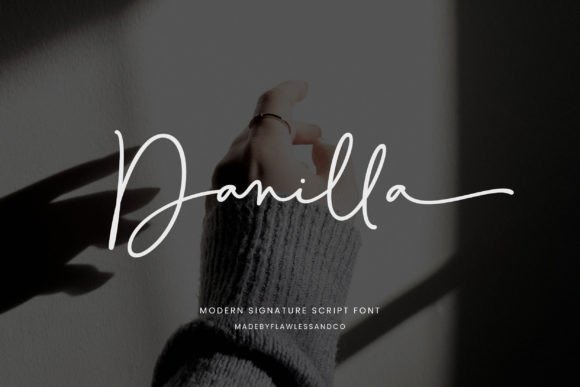
When you look at Danilla, the first thing you notice is the rhythm. It isn’t a static, monoline script. The strokes vary in thickness, mimicking the pressure changes of a pointed pen or a high-quality brush marker. This variation gives the font a dynamic energy. It feels alive on the page. The letterforms connect with a natural flow, but the baseline isn't rigid. This slight irregularity is what provides that "human" element—perfect for brands that want to appear approachable rather than corporate.
The personality of Danilla leans heavily into modern sophistication. It avoids the overly swirly, Victorian aesthetic of vintage scripts. Instead, it offers clean entry and exit strokes, making it highly functional for connecting words. The flourishes are tasteful, often appearing at the beginning of capitals or the tails of ending letters, adding flair without overwhelming the eye. It strikes a balance between a premium font aesthetic and the usability of a standard display font.
One of the standout features is the extensive character set. A common issue with script fonts is a lack of alternates. Danilla typically includes stylistic sets and ligatures that allow you to customize the look. If two letters in a logo look awkward together, you can swap in an alternate version to create a seamless connection. This level of control is essential for logo design and brand identity work, where every curve matters.
Strategic Applications: Where Danilla Shines
Understanding the visual style is one thing; knowing where to deploy it is another. The versatility of Danilla makes it a strong contender for a wide variety of projects, but context is king. Here is how this creative font performs across different mediums.
Branding and Identity Systems
For brand identity, Danilla serves as a powerful primary wordmark. It works exceptionally well for businesses in the lifestyle, fashion, beauty, and wedding industries. Think of a boutique hotel or a high-end florist; the font immediately signals luxury and care. However, it is versatile enough for a coffee shop or a creative agency that wants to emphasize personal connection. When using Danilla for a logo, it is crucial to pair it with the right secondary typeface to ensure the brand system is robust.
Packaging and Editorial Design
In packaging design, shelf appeal is everything. Danilla can highlight product names or flavor descriptions, drawing the eye to the most important information. It adds a tactile quality to digital mockups and printed labels. Similarly, in editorial design, such as magazine headers or blog graphics, it breaks up the monotony of body text. It works beautifully for pull quotes or chapter titles in book design, adding a touch of elegance to the reading experience.
Digital Presence and Social Media
The web is often dominated by safe, system fonts. Using Danilla in web design—specifically for hero section headers or call-to-action buttons—can significantly increase engagement. It draws attention without being aggressive. For social media graphics, where users scroll rapidly, a distinct script font stops the thumb. It is perfect for Instagram quotes, Pinterest pins, and YouTube thumbnails. The modern style translates well to screen resolutions, maintaining its charm even on mobile devices.
Typography in Practice: Pairing and Readability
Choosing a creative font like Danilla is only half the battle. The real skill lies in implementation. As a modern typography choice, it requires careful handling to ensure your design remains professional and accessible.
The Art of the Font Pairing
Because Danilla is expressive, it demands a grounding partner. A common mistake is pairing a script font with another decorative font. This creates visual noise. Instead, look for a clean, geometric sans serif font or a sturdy serif font.
- With Sans Serifs: Pairing Danilla with a minimalist sans serif (like Montserrat or Lato) creates a modern, clean look. The contrast between the organic curves of the script and the rigid geometry of the sans serif creates a pleasing visual hierarchy.
- With Serifs: If your brand is more traditional, pairing it with a classic serif (like Garamond or Playfair Display) can create a timeless, editorial feel. This works well for editorial design and wedding stationery.
Readability and Hierarchy
While Danilla is legible for a script, it is not a body text font. Never set long paragraphs in a handwritten font; it causes eye strain and hurts the user experience. Use Danilla for headlines, sub-headers, or accent text. Use your secondary font for the heavy lifting of information.
Visual hierarchy is about guiding the reader's eye. Use Danilla to emphasize the emotional hook of your message—the headline that grabs attention—while the supporting text provides the data. This contrast in style helps organize information logically and aesthetically.
Practical Considerations for Professionals
If you are a designer, entrepreneur, or content creator looking to integrate Danilla into your workflow, there are a few technical aspects to consider to maximize its potential.
Testing and Evaluation
Before committing to a font for a large-scale project, test it. Type out the specific words you intend to use. Script fonts can behave differently depending on letter combinations. Check the kerning (spacing) between letters. Does the "r" crash into the "o"? Does the "t" connect well with "h"? Danilla usually handles this well with its OpenType features, but always toggle your stylistic alternates to see if a different version of the letter looks better in your specific context.
Licensing and Usage
As a commercial font, licensing is a critical, often overlooked step. If you are a freelancer designing a logo for a client, you need to ensure the license covers commercial use. If you are a small business owner creating your own marketing materials, the same applies. Most premium font licenses distinguish between desktop use (for print/design software) and web use (for CSS embedding). Ensure you have the correct license for your web design needs if you plan to use Danilla on your website.
Contextual Swashes
Take advantage of the "Contextual Alternates" feature in your design software (like Adobe Illustrator or Photoshop). This feature automatically swaps out characters to ensure better connections based on the surrounding letters. It is a subtle tweak that makes the typography look hand-crafted rather than typed.
Conclusion: Elevating Your Visual Language
In the world of design, details signal quality. A generic font can make a brand look forgettable, while a well-chosen typeface like Danilla communicates intention and style. It offers the elegance of a signature with the structure of a professional typeface. Whether you are designing a wedding invitation, crafting a social media campaign, or building a brand identity from scratch, this font provides the tools to make your work feel personal, polished, and modern. It is more than just letters on a screen; it is a way to elevate your designs and connect with your audience on a more human level.